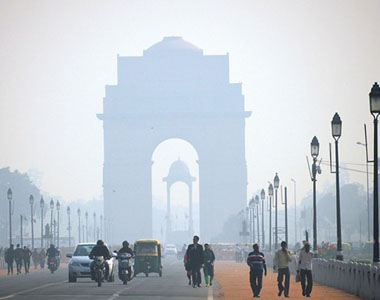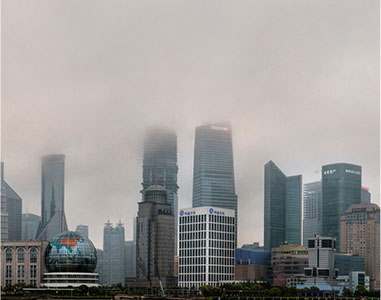

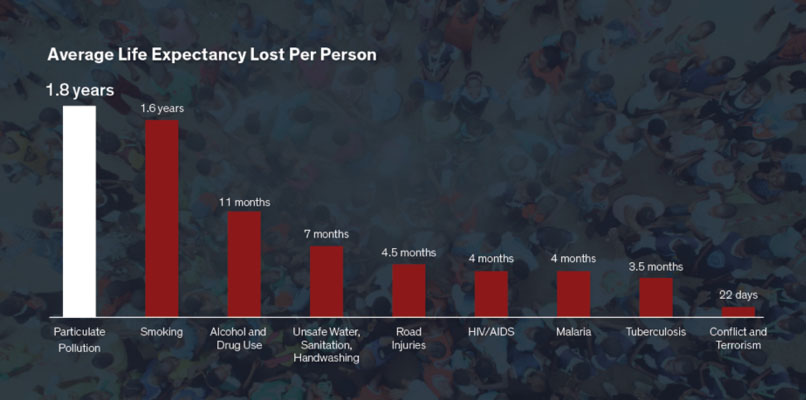
Air pollution, caused largely by burning fossil fuels, is cutting global life expectancy by an average of 1.8 years per person, making it the world’s top killer, researchers said on Monday.
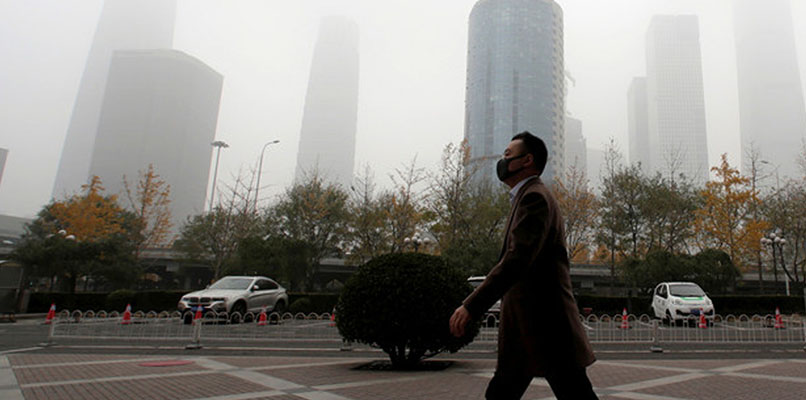
The tiny particles ingested from polluted air shorten life more than first-hand cigarette smoke, which can reduce it by 1.6 years, and are more dangerous than other public health threats such as war and HIV/AIDS, they said.
The University of Chicago’s Air Quality Life Index (AQLI) shows people in parts of India, the world’s second-largest country by population, could live 11 years less due to high levels of air pollution.
Life expectancy averages slightly below 69 in the South Asian nation of 1.3 billion, according to the World Bank.
The researchers launched a website that tells users how many years of life air pollution could cost them according to which region of a country they live in.
The index seeks to transform hard-to-comprehend data into “perhaps the most important metric that exists - life”, Michael Greenstone, director of the Energy Policy Institute at the University of Chicago (EPIC), said in a statement.
Particulate pollution is normally measured in micrograms per cubic meter.

Opinion: Poor Science Contributes to
Delhi’s Air Pollution Crisis
Air Pollution Linked to Decline in
Cognitive Performance